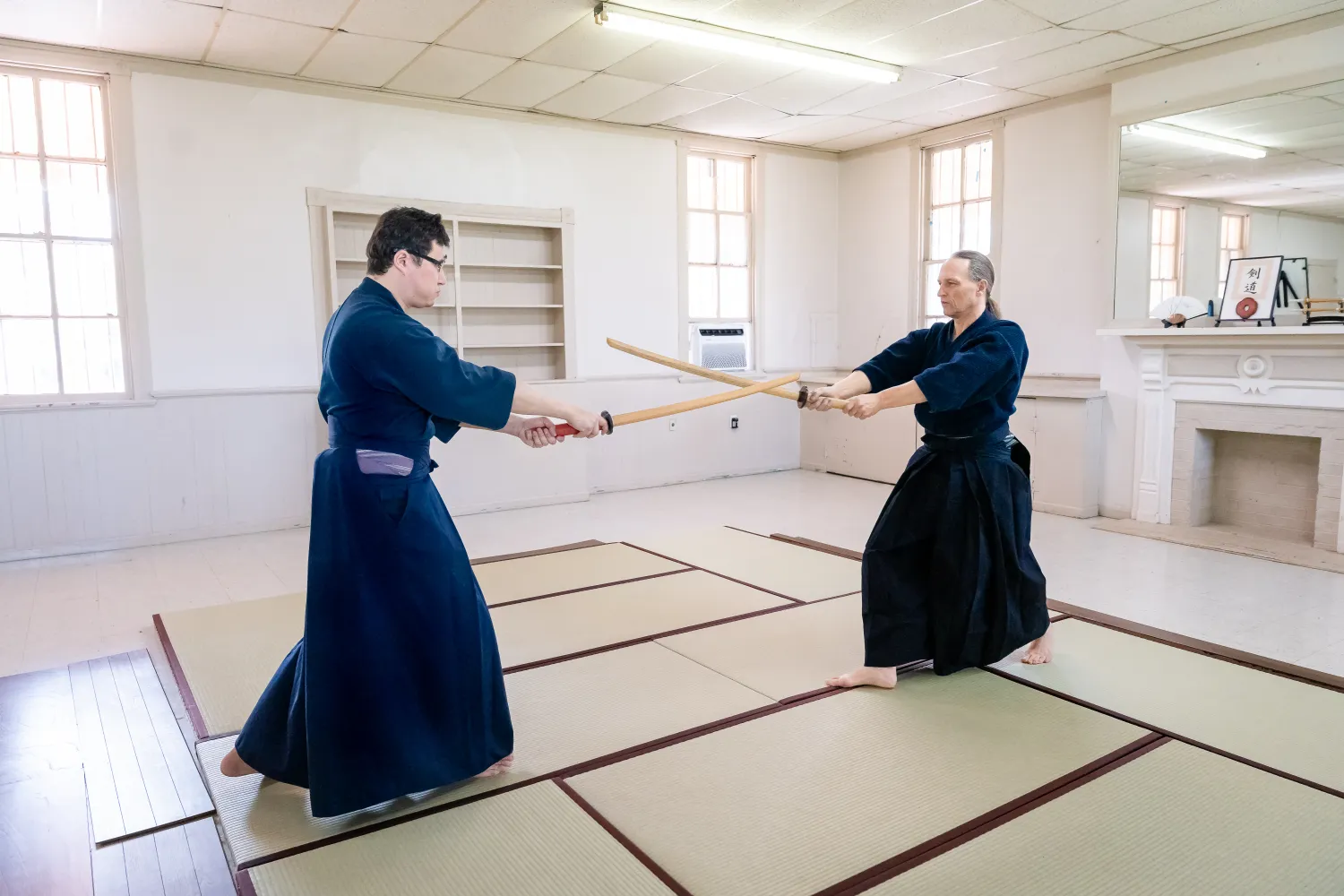
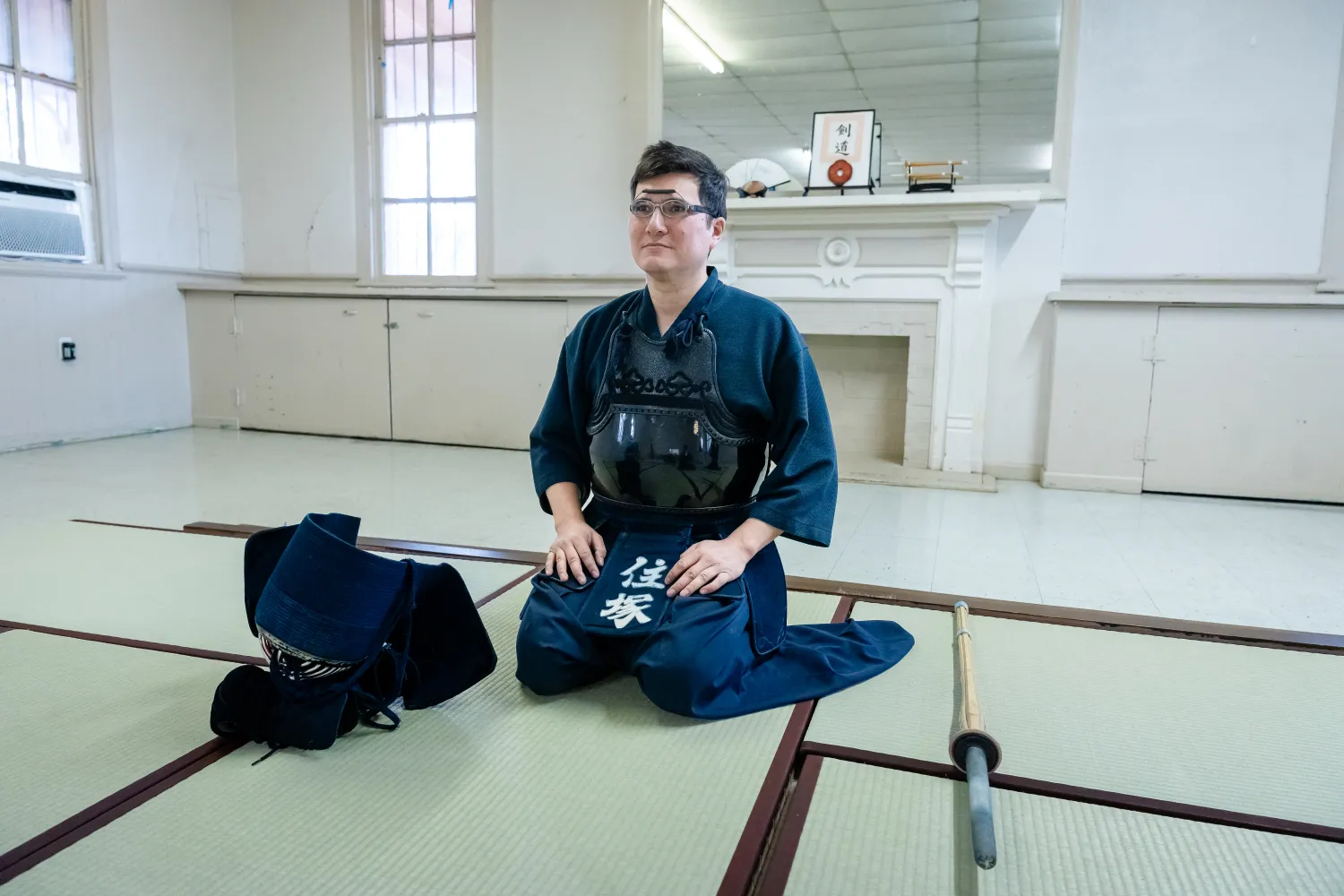
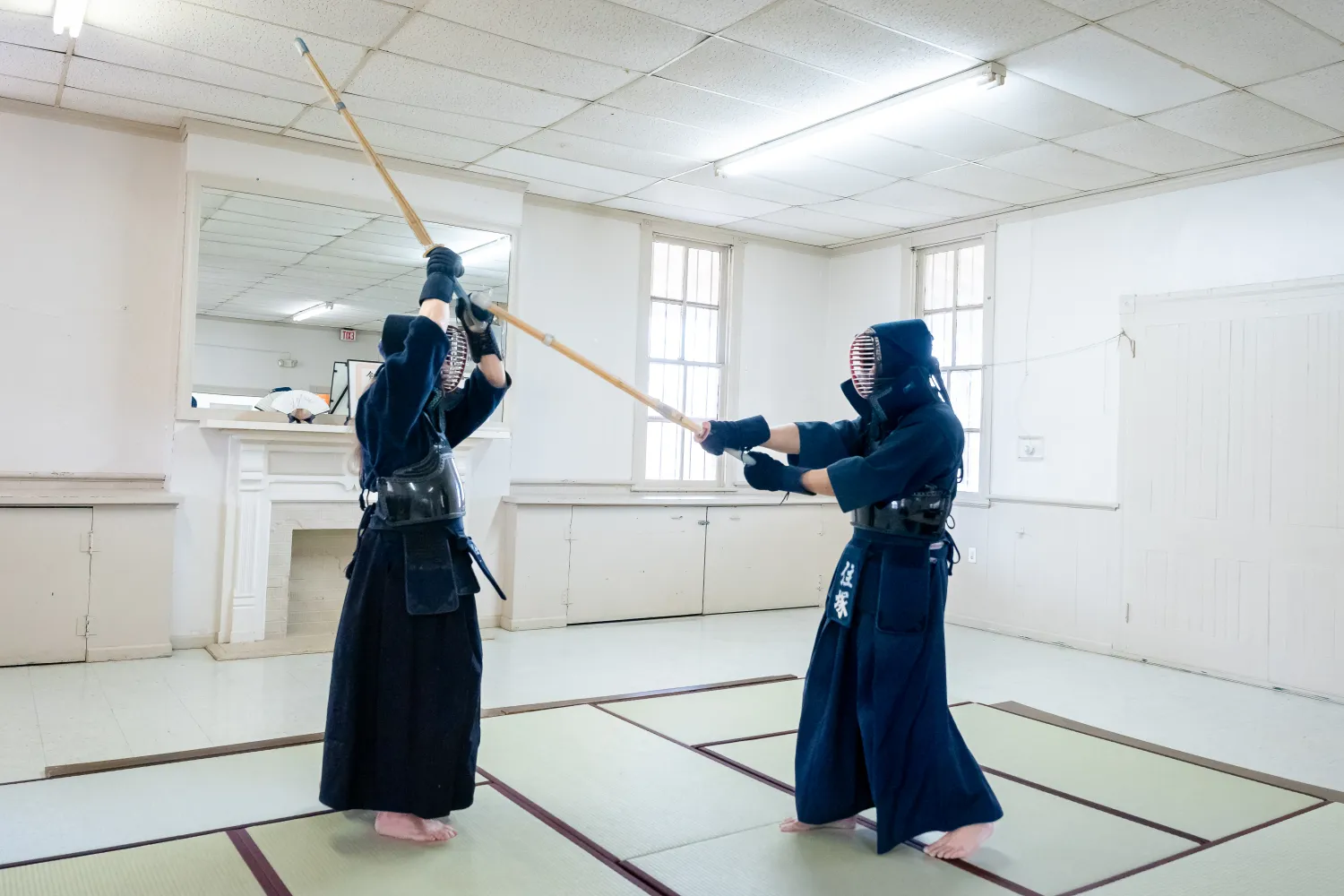
ZNKR Kendo (全日本剣道連盟剣道) is a modern martial art form of Japanese fencing. It comes from the sword arts of ancient Japan, and is the modern incarnation of a centuries-long evolution. Kendo is made up of two parts: kata (fixed paired patterns of techniques) and keiko (sparring in bogu (armor)). We use two types of swords: a bokken (wooden sword) for kata and a shinai (bamboo sword) for sparring.
Kendo is more than just learning to fence with a sword, it is also about proper discipline and spirit.
Our Styles
Zen Nihon Kendo Renmei Kendo 剣道
The kata you will learn is as follows:
Bokuto Ni Yoru Kendo Kihon waza Keiko-ho (Tachi vs. Tachi)
Bokuto Ni Yoru Kendo Kihon waza Keiko-ho (Tachi vs. Tachi)
- Kihon 1: Ippon-uchi no waza
- Kihon 2: Renzoku no waza (Ni/Sandan no waza)
- Kihon 3: Harai waza
- Kihon 4: Hiki waza
- Kihon 5: Nuki waza
- Kihon 6: Suriage waza
- Kihon 7: Debana waza
- Kihon 8: Kaeshi waza
- Kihon 9: Uchiotoshi waza
- Men, Kote, Do, Tsuki
- Kote, Men
- Harai Men
- Tsubazeriai kara no Hiki Do
- Men, Nuki Do
- Kote, Suriage Men
- Debana kote
- Men, Kaeshi Migi-Do
- Do uchiotoshi Men
-
Kendo Kata: Tachi kata 1-7 (Tachi vs. Tachi)
Ippon-me (Men Nuki Men)
Nihon-men (Koto Nuki Kote)
Sanbon-me (Tsuki Kaeshi (Nayashi) Tsuki)
Yohon-me (Tsuki Makikaeshi Men)
Roppon-me (Kote Suriage Kote)
Nanahon-me (Men Nuki Do)
Kata 8-10/Kodachi kata 1-3 (Kodachi vs Tachi
Happon-me/Kodachi Ippon-me
Kyuhon-me/Kodachi Nihon-me
Juppon-me/Kodachi Sanbon-me
Class
Suburi (素振り): Warm-Up SwingingKiri-kaeshi (切り返し): Striking the left and right men target points in succession, practicing centering, distance, and correct technique, while building spirit and stamina.
Waza-geiko (技稽古): Waza or technique practice in which the student learns and refines the techniques of Kendo with a receiving parnter.
Kakari-geiko (掛稽古): Short, intense attack practice which teaches continuous alertness and readiness to attack, as well as building spirit and stamina.
Ji-geiko (地稽古): Undirected practice where the kendōka tries all that has been learned during practice against an opponent.
Gokaku-geiko (互角稽古): Practice between two kendōka of similar skill level.
Hikitate-geiko (引立稽古): Practice where a senior kendōka guides a junior through practice.
Shiai-geiko (試合稽古): Competition practice which may also be judged.
Kendo Modern Practice
Waza-geiko (技稽古): Waza or technique practice in which the student learns and refines the techniques of Kendo with a receiving parnter.
Kakari-geiko (掛稽古): Short, intense attack practice which teaches continuous alertness and readiness to attack, as well as building spirit and stamina.
Ji-geiko (地稽古): Undirected practice where the kendōka tries all that has been learned during practice against an opponent.
Gokaku-geiko (互角稽古): Practice between two kendōka of similar skill level.
Hikitate-geiko (引立稽古): Practice where a senior kendōka guides a junior through practice.
Shiai-geiko (試合稽古): Competition practice which may also be judged.